My interview with Demetra George and the ancient mysteries of the Dark Moon
A few years ago, I had the pleasure of interviewing one of the astrologers I admire most, Demetra George.
I’d first discovered her book Mysteries of the Dark Moon while travelling in France and reading beside Lake Geneva. It was one of those rare astrology books that changes how you see the Moon forever. I kept returning to it, sensing that it held something ancient and important.
When Demetra finally joined me on my show, our conversation ranged across lunar phases, goddess traditions, forgotten astrological teachings, and the regenerative power of the Dark Moon itself.
It’s a discussion I still think about today.
Who is Demetra George?
Demetra George is a professional astrologer, teacher, and author known for blending mythology, archetypes, and ancient techniques into modern astrology.
She has been active in the field since the 1970s and has written influential works including Asteroid Goddesses, Astrology for Yourself, and Mysteries of the Dark Moon. She has taught internationally and worked with ancient Greek and Latin texts, bringing lost astrological wisdom back into contemporary practice.
Her lifelong love of myth began in childhood, through stories told by her grandmothers, and later evolved into pioneering work with asteroid goddesses and lunar archetypes.
Why the Dark Moon matters in astrology
One of the most compelling parts of our interview was Demetra’s explanation of why she was drawn to the Dark Moon in the first place.
Living by the Oregon coast, watching the tides rise and fall, she became fascinated by the moment each month when the Moon disappears from sight.
Instead of viewing this phase as ominous, she saw it as sacred.
A pause.
A withdrawal.
A necessary clearing before renewal.
She suggested something radical. Perhaps the goddess was never destroyed at all. Perhaps she simply entered her hidden phase, just as the Moon does, retreating into darkness so she could regenerate and re emerge.
Darkness, in this framing, becomes medicine.
The Third House and the forgotten House of the Goddess
Demetra also shared something rarely taught in modern astrology.
In ancient texts, the Third House was known as the House of the Goddess, while the Ninth House opposite it was called the House of God. The Moon was said to rejoice in the Third House, just as the Sun rejoiced in the Ninth.
Those sources associated the Third House not only with communication or short journeys, but with dreams, divination, women’s sacred rites, and spiritual practice.
Much of that symbolism was lost for centuries while ancient Greek and Latin texts sat untranslated in libraries, only resurfacing in the modern era.
It’s a powerful reminder that astrology has always held deeper layers than we’re often shown.
Medusa, Lilith, and reclaiming feminine power
We also explored Demetra’s interpretations of dark goddesses such as Medusa and Lilith.
She spoke about serpents as ancient symbols of wisdom and regeneration, and how Medusa’s snake crowned head may once have represented awakened feminine consciousness rather than something monstrous.
Her perspective was calm, scholarly, and quietly radical.
The fear surrounding these figures, she suggested, often reflected cultural anxiety about women expressing their intelligence and spiritual authority.
Reclaiming these archetypes helps us reclaim parts of ourselves.
 How to work with the Dark Moon
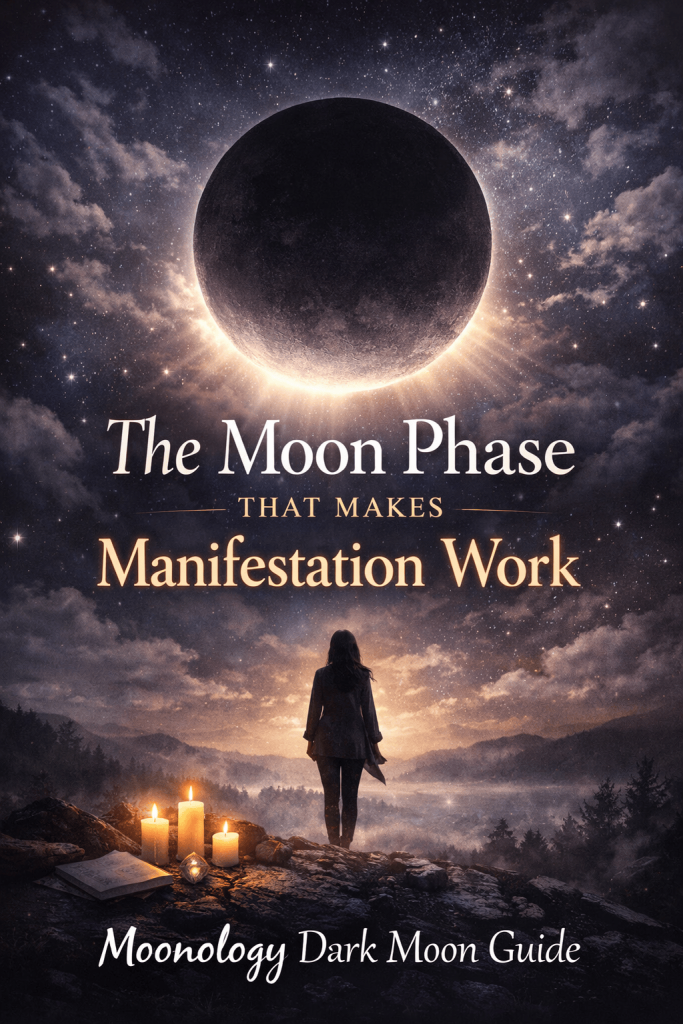
Toward the end of our conversation, I asked Demetra what she personally recommends people do during the Dark Moon.
Her advice was beautifully simple.
Slow down.
Clear your space. Take a bath or shower. Step away from screens. Turn off artificial light. Create stillness.
She suggested using this time for journalling, meditation, divination, dream work, or simply allowing the mind to soften.
The Dark Moon, she said, is ideal for deep healing and preparing for the next cycle that begins at the New Moon.
It echoed so much of what I now teach myself. The Dark Moon isn’t about forcing change. It’s about emptying out what no longer belongs, so something new can begin.
Why this conversation still matters
Re reading this interview now, what strikes me most is how relevant it feels.
We’re living in a world that’s hungry for slower rhythms, deeper cycles, and spiritual frameworks that honour rest as much as action.
The resurgence of interest in lunar work and goddess traditions makes complete sense.
Demetra’s work helped lay much of that foundation decades ago.
For me, that conversation remains one of the most meaningful I’ve ever recorded.
Astrology isn’t just prediction.
It’s remembrance.
A remembering of ancient rhythms.
A remembering of feminine wisdom.
A remembering that sometimes, the most powerful thing we can do is step into the dark, not with fear, but with reverence.
Want to explore the Dark Moon for yourself?
If this has sparked your curiosity about the Dark Moon, I’ve created a free guide to help you work with this powerful lunar phase in a grounded, supportive way.
You can download it here:
https://magic.moonology.com/get-dark-moon-guide
It’ll show you how to use the Dark Moon for release, healing, insight, and renewal so you can move into each New Moon cycle clearer, lighter, and more aligned.